Poetry unfurls your dreamworld
Hi, friends. How's it going? I am, coming to you today to continue my five part series, leading up to the launch of my offer, Illumi9ate. This week, we're going to talk about poetry as an intuitive technology, that helps us with creating blueprints, for the inevitable realization of your dreams into reality.
So for those of you who are just joining this week, I invite you to checkout the last four episodes where I go through the arc of this journey that I'm hoping we will collaborate on, when I launch this offering, Illumi9ate. This offering is for folks that I'm calling light-bearing leaders who are, you know the people that are able to really show up for others and show up with care and leadership and to support the growth and journeys of the people around them, while struggling to shine a light on their own dreams and themselves. This program is for you if you are a light bearing leader who is also making some kind of bold move towards being the free architect of your creative life. And, you want to do this because you aren't willing to be boxed into any kind of oppressive systems or institutions that demand that you dim your light.
Maybe you are taking a leap towards entrepreneurship. Maybe it is making more space for your creative life. Whatever that is, there is a sense of fear and freefall feeling that a transition like this tends to entail. This program is aimed at equipping you with the tools and practices that are going to enrich, clarify and soothe this transition for you. It is be a four part journey where we will investigate and release illusory fears and thought prisons that attempt to keep you stuck or small--- so you can remember and reclaim your dream, playful, creative self.
We've been on this journey, in the last five weeks. First, defining who light-bearing leaders are. Then I talked about the role of astrology in dismantling the limiting beliefs, thought prisons and patterns of anxiety that keep you stuck in loops— by zooming out and getting a cosmic view of your own map that exists for the understanding the patterns that hold you back and learning where those challenges can be turned into gifts. From there, we go into feeling into the sense of grief that often exists and loss that exists around your ecosystem and communities and not entirely feeling like you belong somewhere, and what role the Tarot can play in dropping you into an ecosystem that you have always belonged to. And then we traverse into the dream world. And we're kind of in the manifestation part of the dream world in this part of the journey. Last week, I talked about Human Design and the possibilities it can open up in taking that dream and supporting the how of that dream. What ways can you channel your energy and your resources so that you can continue to sustain the dream coming into reality?
This week, we get into poetry, where we're really going to feel into the sensory experience and the blueprint, if you will, of your dream inevitably coming into fruition.
So, poetry has been such an influential force in my life for a very long time, especially in the last, almost two years. And I wanted to bring to you, this quote from Audre Lorde's essay, Poetry is not a Luxury, that is in the Sister Outsider collection, but I believe was first published in 1977 in Chrysalis, a magazine of female culture, Number 3.
Okay, so if you stop this episode and all you do is go and read this essay, you will get what you need to get from this. But if you choose to stay, I'm going to bring excerpts from this essay into the storytelling of how I have gone from being disconnected from my own dreams of being an artist and a writer and a poet, to being in playful experimental practice in relation to it. And also how engaging in poetry in the last two years has shown me the power of having language to describe the worlds that I am building even when it feels far away and being able to bridge it by just dreaming up some language for it. Right now, I'm also feeling into how all of those poems have really shaped and changed my reality, and I'm kind of mind-blown.
So going back to Audre Lorde, there's a quote from this essay where she says, "I speak here of poetry as a revelatory distillation of experience, not the sterile wordplay that too often our white fathers distorted the word poetry to mean, in order to cover a desperate wish for imagination without insight." So powerful. I want to bring this particular quote in to kind of provide a working definition of poetry that we're working with here.
"Poetry as a revelatory distillation of experience, not sterile wordplay.." I'd like to speak to this for just a moment because often, I talk to people who aren't super drawn to poetry or feel that they can't read poetry because it's too hard to understand. And I feel this myself because I definitely felt like I was in the same boat. I didn't feel that I had a very good sense of poets or poetry that I was really drawn to. When I did find such poetry, I was often stumped by not being able to fathom or understand what was going on. A lot of poetry that I read growing up was definitely by white men, Robert Frost comes to mind. And even though those those poems were influential in my life, it's just.. in the last few years of my radical liberatory journeys, it's been a bit distant for me.
Sometimes in retrospect, I am like, this stuff has always been around me. But when I did read poems from people whose work I wanted to connect to, I still found a little bit of a gap in being able to parse or understand it in the first place. And there are.. I have learned over time that there are ways to break it down and learn these things such that you can understand, that could be part of the work we do. But let's go back to this "revelatory distillation of experience, not sterile wordplay" notion, where what we're talking about is not cleverness with language. What we're talking about is the inherent ability that you have irrespective of whether or not you want to be a poet or you consider yourself a poet --- to be able to draw from the deep dark well of your own experiences and then build a bridge from there to the worlds you imagine. And that's what Audre Lorde's essay really goes into. So, like I said, highly recommend reading it.
With that definition, let's go into my own story here with poetry. In March 2024, I was recovering from top surgery. I was quite devastated and depressed due to some post surgical complications, but also the end of friendships and collaborative artistic projects that were all dissolved just before my surgery. And I was feeling really raw, and I was starting to realize how I had focused my artistic practice on realizing other people's dreams, or on trying to tailor it towards some kind of external validation of my art from sources that were outside of me. I was starting to get honest about my own role in those relationships and collaborations and how I had deprioritized my voice as an artist. And how I had withdrawn my belief in my own dreams in order to feed into others' dreams, because I felt that they were somehow more worthwhile or more possible.
It was a time of waking up from an illusion and into my own vision, and it felt very far away at the time. It felt like I was starting over. It felt like I had wasted my time, and yet I could tell that it was a new beginning. It wasn't gonna be easy, but from this place of just really coming in contact with how far it could go when I wasn't in touch with myself. Feeling into what could happen if I did prioritize myself, one of the first things I did in this process was to sign up for a poetry class, which I have talked about before on this podcast. And I had this phenomenal opportunity to study with Tyler Pennock who was my poetry teacher in a continuing ed class called Writing Poetry at University of Guelph. And at the time, I was like, there is something that people know about poetry that I don't know because I feel like when I write poems, it was too raw. On the practical side, I kept telling myself, no one will publish my work. You know? So there was that, that was kind of feeding into it, the sense of, what do people that get published know that I don't know?
There was also the sense of I'm reading poems, but I'm not fully understanding how people arrived at the the kind of form that they're using, especially with more, modern or postmodern poetry. I was really confused as to what was going on. Like, in one of the poems that I had read.. I had bought this book that was a collection of poems published for the Griffin Poetry prize. And I read this beautiful poem by Layli Long Soldier where the poem was in the shape of a square. And I though, oh, wow, people who win poetry awards.. this is how they do it, by making poems in squares! Jokes aside, it was truly a mind blowing poem, and I was like, how did they get here? You know?
While I had this kind of inquisitiveness and thirst for knowledge coming into this class, I was also very disillusioned from my history community spaces. So I didn't know what to expect, but it was honestly one of the best community experiences I've ever had. Who knew that I was going to be opened into a world of poetry that was so palpable, so close to me, so much around me. I had been reading this essay before this for years, and yet I needed that invitation and the introduction to really open up into poetry, as a way to connect parts of myself that I held really disparate until that time.
A lot of times when I would go to open mics or things like that and listen to poetry.. One, I found it very hard because I don't process very well just from listening, but I also felt kind of out of place. I was like, oh, these folks are reading poetry about nature or their dogs, and I'm not feeling anything. I'm not feeling anything because there is so much going on in the the politics of the world, whether it's present or ongoing, and none of that seems to be represented. Or it would swing to the other end of the spectrum where, there's poetry that is really raw and angry, and I was definitely making some of these poems myself where I would write from a place of my raw emotional experience. And even if it was powerful sometimes and it would make me feel things to either listen to these these poems or to read my own, I felt it was too raw. It was too close to me.
I could remember every single word that I wrote, and when even when people would give me feedback on my poems, it would be about me. They would say things like, oh my god. I can't believe you went through that. I'm so sorry. And I'd be like, well okay, cool! But that's not why I wrote this poem. Like, there's a point underneath it. But because of how I was showing up to my work from this very raw place, that was being reflected back to me when people were reading it.
So what I really learned in Tyler's class from reading amazing poetry and talking about it with this supportive group of peers in a facilitated container, reading poets like Dionne Brand, whose work the Blue Clerk, really fundamentally shifted my understanding of what it means to be a poet. Reading Magnetic Equator by Kaie Kellough, which is such a phenomenal, collection of poems. So many more poets. And my classmates, one of my classmates was was published this year. I think I shared their book, Non-Prophet, a while back—Qurat Dar, Such an amazing poet.
What I really learned in this class, if I had to really distill it, was the process of creating a little bit of distance and perspective to be able to look at the deep, dark, emotional, vulnerable, experiential places of my life. And instead of just throwing all of that on the paper and calling that a poem, what does it look like when you have the perspective to be able to transmute that experience into a creation that isn't just about you, but is able to invite the reader into their own felt experience and leave them ultimately altered—because they got to experience and bring their own self into your art.
I learned the difference between journaling and making art. And I don't wanna take away from the creative power of journaling. What I'm saying is, that journal where your raw experience lives can become the foundation--- when you do have some distance, when you are connected to your politic, your values, your dreams, your visions, to be able to take what came from the raw place, and make something that is beautiful, real, and has the power to offer an experience that is going to fundamentally shift and shape reality itself. This is where the liberatory possibilities of poetry start to show up. I'm going to go back to Audre Lorde who says,
For women then, poetry is not a luxury. It is a vital necessity of our experience. It forms the quality of the light within which we predicate our hopes and dreams towards survival and change, first made into language, then into idea, then into more tangible action.
Poetry is the way we help give name to the nameless so it can be thought. The farthest horizons of our hopes and fears are cobbled by our poems carved from the rock experiences of our daily lives. As they become known to and accepted by us, our feelings and the honest exploration of them, become sanctuaries and spawning grounds for the most radical and daring of ideas. They become a safe house for that difference so necessary to change and the conceptualization of any meaningful action. Right now, I could name at least ten ideas I would have found intolerable or incomprehensible and frightening except as they came after dreams and poems.
This is not idle fantasy, but a disciplined attention to the true meaning of it feels right to me. We can train ourselves to respect our feelings and to transpose them into a language so they can be shared. And where that language does not exist yet, it is our poetry which helps us to fashion it. Poetry is not only dream and vision. It is the skeleton architecture of our lives.
It lays the foundations for a future of change, a bridge across our fears of what has never been before.
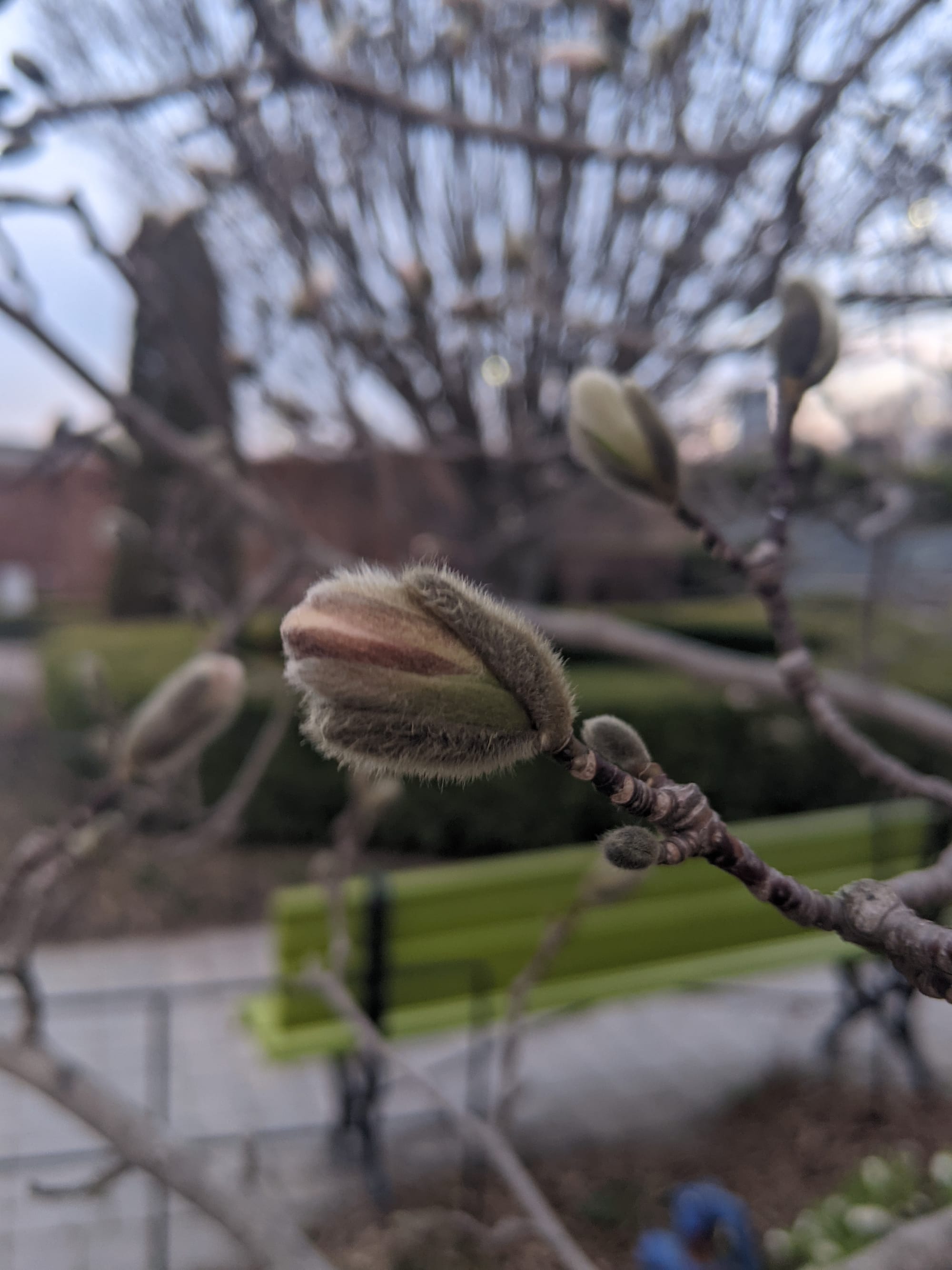
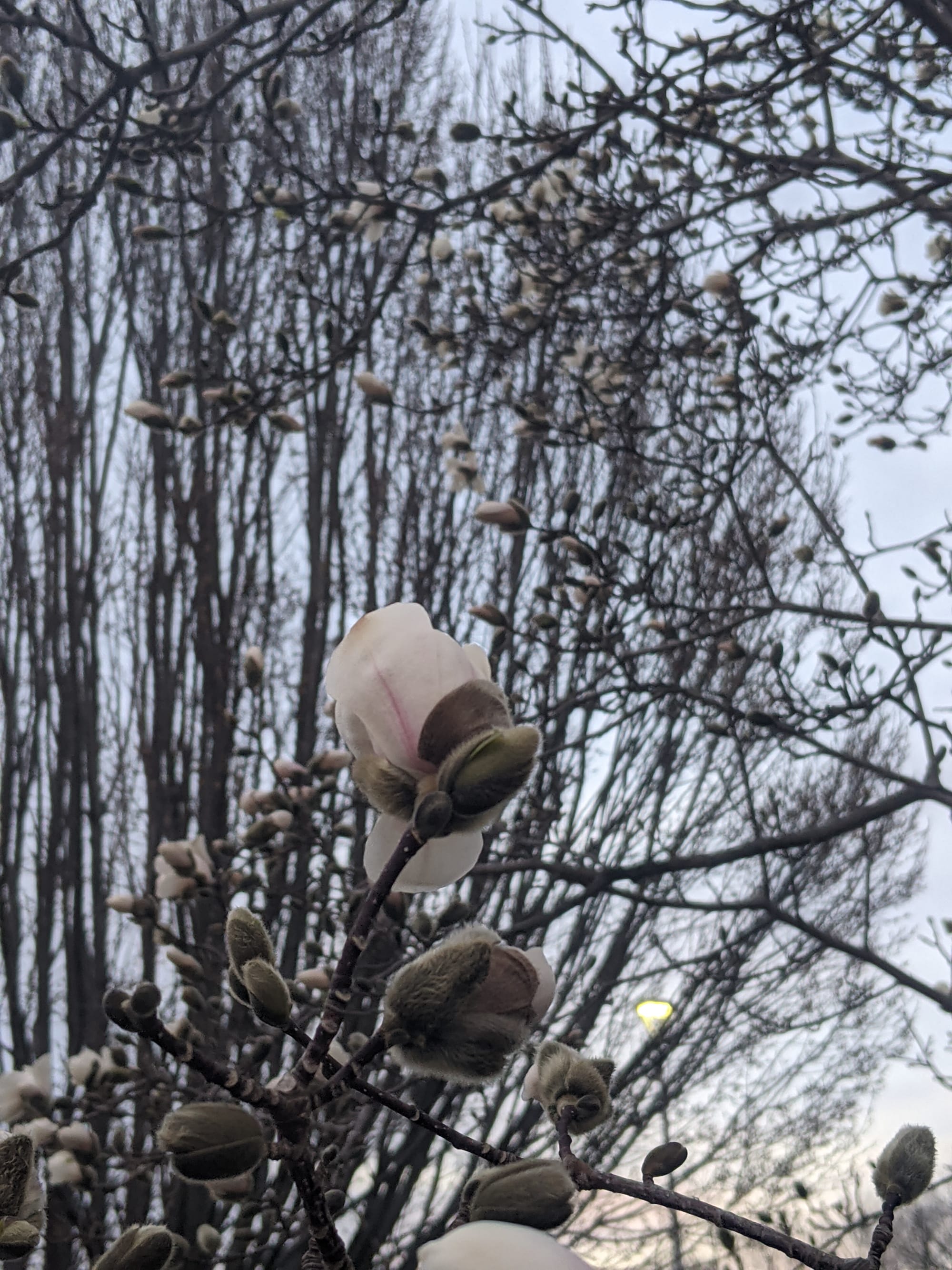
Wow. Every time I read this essay, it hits deeper and deeper. What happened for me from the process of being in that class and making these poems, One, it showed me how like I said, there were these disparate parts of myself, including the parts of me that say, was going around walking around in parks, taking pictures of trees and learning what their names were. I would spend time outside just looking at clouds, for instance. And when I started to read these poets, I saw how integral the act of observation is to poetry, how I was already doing that and how it was going to become an even more enriching gift in my artistic process.
But like we said, we're not talking about "sterile wordplay". We're not talking about just going into nature and recording our observations, what we're talking about is— how do we practice feeling?
How do we practice presence?
How do we practice existing in our body, in our sensorium, in being connected to our senses in feeling and breathing with the trees around us. In feeling with the waves that the ocean brings and withdraws, in breathing alongside the birds that are chirping outside your window, in feeling the joy of the moss that grows on trees, of the mud that is outside my window right now.
(We're talking) of dropping into a time space that is attuned with cycles of Earth and nature and the cosmos that do not accept bondage from any colonial capitalist definition of clock time.
In that liminal space of feeling and presence and body orientation, that's where this "poetry as a revelatory distillation of experience" in Lorde's words lives, in my experience at least.
Living in this world where it is so easy to be caught up in our mind---everything from the attention economy and how much we are on social media, on the Internet, consuming things, reading or scrolling or watching TV or or whatever it is. But all of these, even though we need all of these things, there's this sense of being, so caught up in the mind loop of it all that weren't we're not really feeling, and that is by design.
Because emotions actually exist in slower time, it's not possible to just rush through them. You have to be able to allow for that wave of emotion to go through you. And when we do that, when we experience those feelings, when we allow us to open into those harder places or joyous places because there can be good feelings too.. From that place, our imagination can start to open up, and our imaginations are a dangerous thing to capitalism.
Our dreams are dangerous to capitalism, and so our feelings are dangerous to colonial capitalism. We don't feel, we don't dream, and we keep subsisting in what capitalism wants us to believe are the limits of our worlds.
But the moment we start to feel and start to connect to your erotic, those deep places of desire and start to get emotionally honest from these places, your true power, your dreams, and your imagination all start to bubble up and open you up into these possibilities that you didn't entertain before.
In these past few years, I wanna say since 2018, especially since Uranus transited into Taurus, which is an earth sign of survival and growth and nourishment and pleasure and being in our bodies, and Uranus being a planet that brings lightning like change and revelation---revelation of distilled.. "Poetry as a revelatory distillation of experience." It's so Uranian and Uranus in Taurus, when I go back and read these words in this context. Uranus has been going through Taurus since 2018, and it will be done with this, cycle in April 2026. And so it's doing its last stint in Taurus.
And in this time, something that we can observe in the world at large is how much we're talking about our nervous systems and somatics and our body and pleasure and rest and the reclamation of these really fundamental aspects of our being in this planet. We're coming into this kind of transformation that is happening in this realm. And there are a lot of trauma healing and somatic technologies that have become really popular from polyvagal theory to I'm forgetting the name of, it'll come back to me. (Edit: it did! Somatic Experiencing) Anyway, so I wanted to connect that dot because today (Dec 10 at 11:59AM PT), we had this transit happen where Mercury is in Scorpio, sitting in a place of emotional depth and vulnerability and opposing Uranus in Taurus at the very end of the sign, sitting in a place of what we reap and how we support the growth and flourishing of ourselves and our ecosystems and pushing for the transformation that is necessary for that to happen.
To me, poetry sits beautifully in this space. It provides us a path for manifesting our dream worlds through reclaiming our body, pleasure, time, and senses.
I was thinking about the poems that I made in my class in May 2024 and how each of those poems.. for instance, I made this poem that was about trans bathrooms and my experience of trying to choose between bathrooms and what it would be like if we could just have trans bathrooms. This was a dream that I had. And recently, I moved to a new place, and the town that I'm in has these bathrooms that just have, a mermaid and something else (edit: a rancher) on them. And it just says, "Whatever, Just wash your hands" or something like that. And it was like, yeah. This was part of my dream. You know?

Not the entire dream. But this poem was about this notion of having to choose between a bathroom where you're supposed to wear pants or a bathroom where you're supposed to wear dresses. If you think about the symbols of the bathroom, that'll hopefully make sense.
I was also thinking about an exercise that I did in my early days of Seeda School, where we did this kind of imaginative dreaming exercise of trying to write down what it would be like if you were at an artist retreat and what you would be doing, what what would that look like, feel like? It was very poetic. And by that, I mean, it required you to really get in tune with the sensory specifics and your imagination and your deep desires in order to write this. And I'm now living in a place that could pretty much be exactly described in the same way that I imagined a year and a half ago. It's not like I consulted my imagination in order to find this place. But, like I said, poetry creates this blueprint for us to show us where we're going.
I'm going to wrap up here with a final quote from this essay, Poetry is not a Luxury. At the very end of this essay, Audre Lorde says,
For within living structures defined by profit, by linear power, by institutional dehumanization, our feelings were not meant to survive, kept around as unavoidable adjuncts or pleasant pastimes. Feelings were expected to kneel to thought as women were expected to kneel to men, but women have survived, as poets. There are no new pains. We have felt them all already. We have hidden that fact in the same place where we have hidden our power. They surface in our dreams and it is our dreams that point the way to freedom. Those dreams are made realizable through our poems that give us the strength and courage to see, to feel, to speak, and to dare.
If what we need to dream to move our spirits most deeply and directly toward and through promise is discounted as a luxury, then we give up the core, the fountain of our power, our womanness; we give up the future of our worlds.
For there are no new ideas. There are only new ways of making them felt, of examining what those ideas feel like being lived on Sunday morning at 7AM after brunch, during wild love, making war, giving birth, mourning our dead, while we suffer the old longings, battle the old warnings and fears of being silent and impotent and alone while we taste new possibilities and strengths.
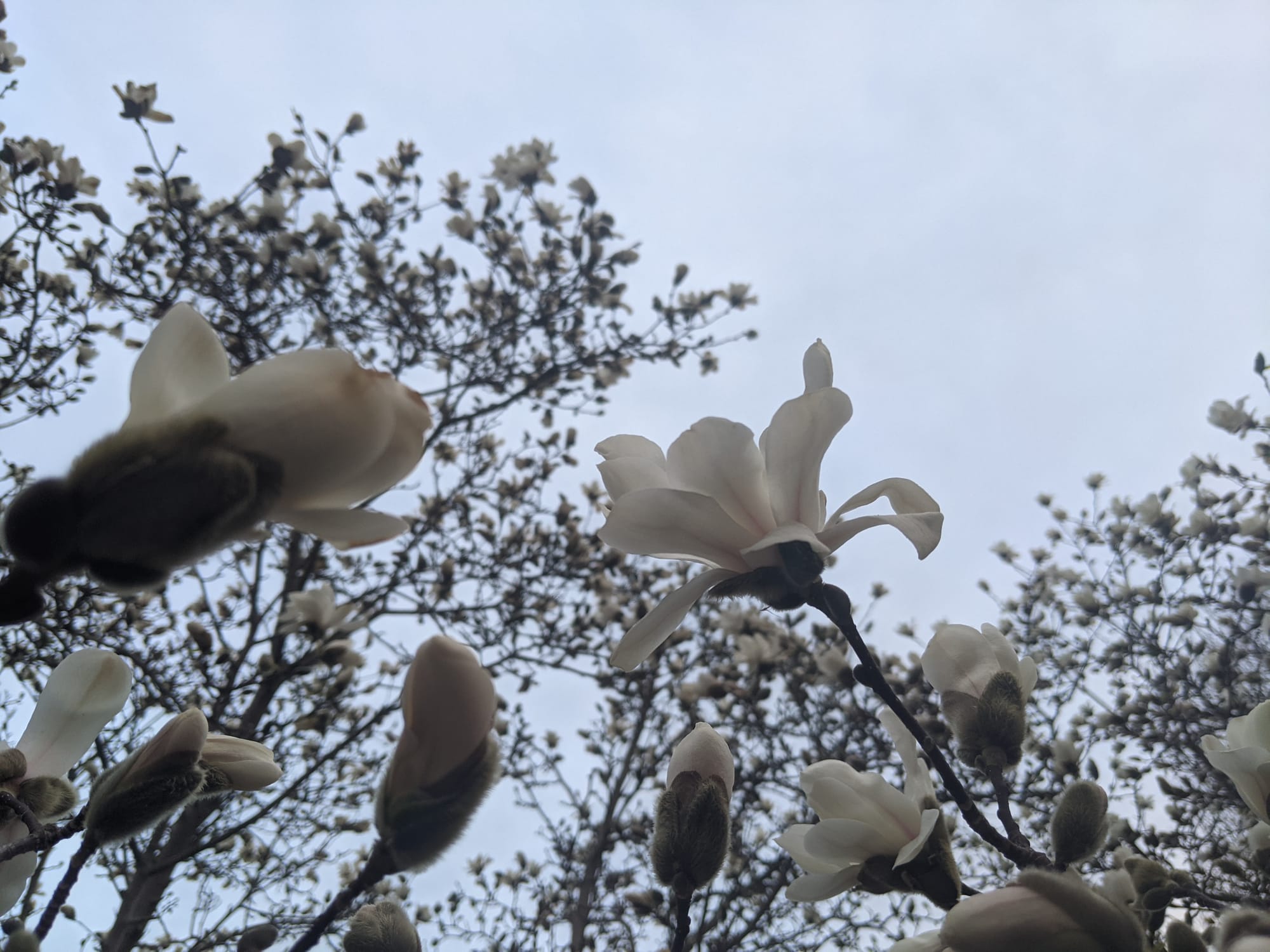
Yes. Let us taste "new possibilities and strengths". In illumi9ate, I'm gonna support you in this final part of connecting to your dreams in this material way in order to.. in Lorde's words again, "lay the foundations for a future of change, a bridge across our fears of what has never been before".
We will create a poem towards the end of our work together.. Well you will create this poem and I'll support you in ways to connect to your poetic voice in order to really solidify your imagination and create a personalized poetic map for yourself that's going to inevitably, inevitably, lead to the realization of your dream world.
Okay. I hope that was helpful. Let me know if you have any questions, feel free to reach out, via the comments here. If you don't subscribe to this newsletter already, I highly encourage it so you can get them as soon as I send them in your inbox. Invite a friend. Next up will be, more info on this offer. I'm still doing the back end work. It looks like I'll be opening up in early 2026 for consultation calls and to actually sign folks up for this journey.
If you're interested and want me to include you in the list of emails that I'm gonna send out, inviting people that may be interested, send me a note. Thanks for being here, and take care, bye 🌈